Educational Funeral and Cremation Videos 

Planning and arranging a funeral is not something most people experience often. For many, it may only happen once or twice in a lifetime — typically for a parent or a close family member. Because of this, it is completely natural to have questions and uncertainties about the process.

At Funerals Your Way, we understand how unfamiliar these decisions can feel. Our series of funeral information videos is designed to answer common questions, explain options clearly, and provide guidance so families can make informed choices with confidence and peace of mind.

National Cemeteries of San Diego

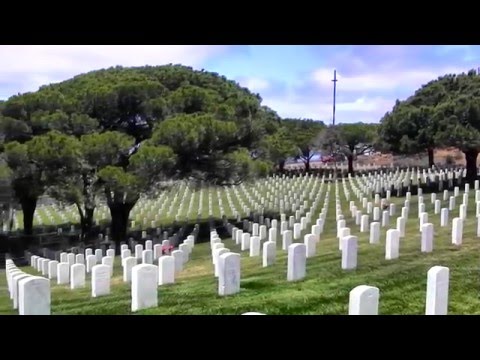
Fort Rosecrans National Cemetery is located at the tip of Point Loma, overlooking the Pacific Ocean. With approximately 100,000 service members and their families interred there, it stands as one of the most significant military cemeteries on the West Coast. The cemetery is currently closed to new casket and cremated remains interments. Each year, Wreaths Across America honors those laid to rest by placing wreaths throughout the grounds in a meaningful tribute to their service and sacrifice.

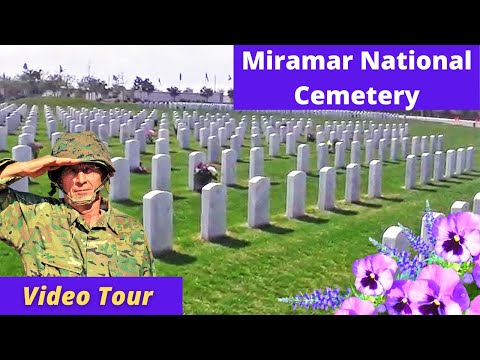
Miramar National Cemetery is located approximately 15 miles north of downtown San Diego. Dedicated on January 30, 2010, this newer national cemetery was established to serve veterans and their families throughout the region and is designed to accommodate approximately 250,000 veterans and their eligible dependents.

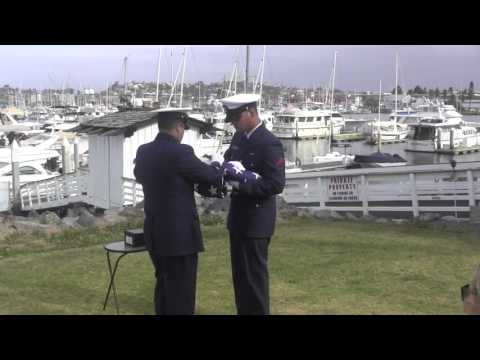
This ceremony took place before the family boarded the yacht for the ash scattering at sea. Military Honors are conducted prior to the veteran’s interment, and at the conclusion of the ceremony, the American flag is formally presented to the next of kin.

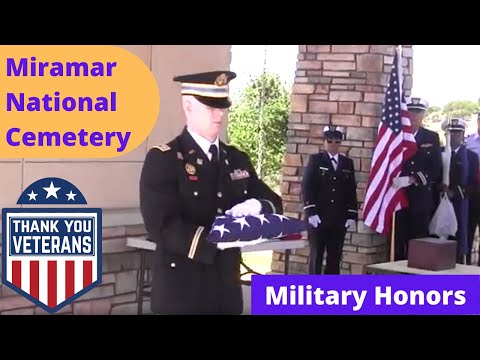
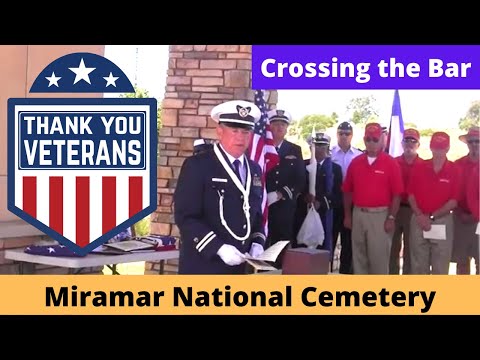
Military Honors were performed by the United States Army at Miramar National Cemetery. Following the ceremony, the American flag was respectfully presented to the next of kin.

The Crossing the Bar ceremony was conducted by the United States Coast Guard Auxiliary prior to the interment at Miramar National Cemetery. “Crossing the Bar” is a maritime tradition symbolizing a sailor’s final voyage from this life into eternity. The “bar” refers to the sandbar at the entrance of a harbor — a place where the sea meets the shore. In nautical tradition, crossing it represents departing safely from the harbor of life into the open sea beyond. The ceremony often includes the reading of Alfred, Lord Tennyson’s poem Crossing the Bar and honors a life of service connected to the sea.
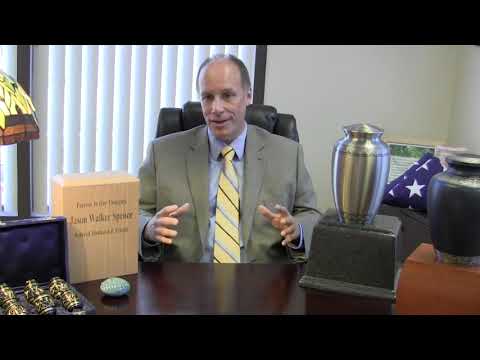
Ask the Funeral Director Series

A large variety of permanent urns are available to suit different preferences, traditions, and memorial plans. They are crafted from materials such as wood, stainless steel, bronze, marble, granite, and other durable materials designed to provide a lasting tribute. Some urns feature classic, understated designs, while others incorporate artistic details, engravings, or personalization options to reflect the individuality of your loved one.

Permanent urns are appropriate for families who wish to keep the cremated remains at home in a place of remembrance, place them in a columbarium niche, or inter them in a cemetery setting. Choosing a permanent urn allows families to create a meaningful and enduring memorial that aligns with their wishes and honors the life that was lived.

Making preneed funeral arrangements is something many people intend to do, but often postpone. Unfortunately, when arrangements are not made in advance, the responsibility for both the decisions and the financial obligations falls to family members during a time of grief and emotional stress.

Preplanning allows you to clearly document your wishes, ease uncertainty, and relieve your loved ones from having to make difficult decisions under pressure. It can also provide financial clarity and prevent unexpected expenses. By taking the time to make arrangements in advance, you are offering your family a lasting gift of guidance and peace of mind.

Please consider making your arrangements so your loved ones do not have to carry that burden alone.

There are many types of biodegradable urns available, crafted from a variety of natural materials such as paper, sand, salt, clay, and other environmentally friendly substances. These urns are designed to break down naturally in water or soil, making them especially appropriate for burial at sea or green burial options. Some are simple and understated, while others feature artistic designs or symbolic shapes that reflect a loved one’s personality or connection to nature.

Selecting the right biodegradable urn can feel overwhelming, particularly during an emotional time. Our team is here to guide you through the available options and help you choose the urn that best aligns with your family’s wishes, values, and the type of ceremony you are planning.

As a funeral director, I am asked many different questions by families, and among the most common are questions about death certificates. Families often want to know how many certified copies they will need, how long the process takes, what information is required, and how the certificates are used for legal and financial matters.

Because the death certificate plays an important role in settling estates, accessing benefits, and handling accounts, it is important to understand how it works. This video addresses the five most frequently asked questions about death certificates to help families feel informed and prepared during an already challenging time.

Many families are understandably confused about who has the legal authority and responsibility to sign the required funeral documents. During an already emotional time, questions about next of kin, legal authorization, and decision-making rights can add unnecessary stress. Understanding who has the legal obligation to authorize arrangements — whether it is a spouse, adult child, parent, or another designated individual — is an important part of the process.

This short video is designed to help clarify who may sign funeral documents and how those decisions are determined under California law. Our goal is to eliminate confusion and provide guidance so families can move forward with confidence and peace of mind.

Many families wonder when the funeral home becomes involved after someone passes away. The answer often depends on where and how the death occurred. The process can differ if a loved one passes at home, in a hospital, in a nursing facility, or unexpectedly under circumstances that require the involvement of the medical examiner.

Each situation has its own procedures, timelines, and required documentation. Understanding these differences can help families know what to expect and who to contact first during an already difficult moment. This short video explains the various scenarios and outlines how and when the funeral home steps in to assist with care, transportation, and the next steps in making arrangements.

Hospice Talks

Coping with grief is a normal and natural part of losing someone close to you. Grief can affect people in many different ways — emotionally, physically, and even spiritually. It is important to recognize that there is no single “right” way to grieve, and that feelings such as sadness, confusion, anger, or fatigue are common responses to loss. At the same time, it is helpful to understand the difference between typical grief and signs that additional support may be needed.

During difficult moments, reaching out can make a meaningful difference. Lean on trusted friends and family members, and consider professional counseling or grief support services if your feelings become overwhelming. You are not alone in this.

For additional support, Health Essential Hospice and Rev. Kathleen Glen are available as compassionate resources for families navigating loss.

Many people initially say they do not wish to have a service. However, there are several meaningful reasons to consider one. A funeral or memorial service is not only about honoring the person who has passed — it is also for the loved ones who remain. Gathering together provides an opportunity to acknowledge the reality of the loss, share memories, offer support, and begin the healing process.

Ritual and ceremony have long played an important role in helping families move forward. Even a simple service can create space for reflection, connection, and closure. This short video explores why services can be beneficial and how they support those left behind.

Presented in partnership with Paramount Home Health and Hospice – Carla Stockton.

Funerals Your Way

Pin It on Pinterest

Call Now Button